


While boom-type elevating work platforms (EWP) may control work at height risks, the movement of mobile plant introduces additional high risk. Persons conducting a business or undertaking (PCBU) usually understand the risks boom-type EWPs pose to people on the ground. However, what’s often not fully considered is the increased crush risk to workers from the boom-type EWP platform or within the basket.
A boom-type EWP is a telescoping device, hinged device, or articulated device, or any combination of these, used to support a platform on which personnel, equipment and materials may be elevated.
It belongs to a group of plant called Elevating work platforms (Mobile) | SafeWork SA (MEWP). However, boom-type EWPs do not include a scissor lift or vertically moving platform.
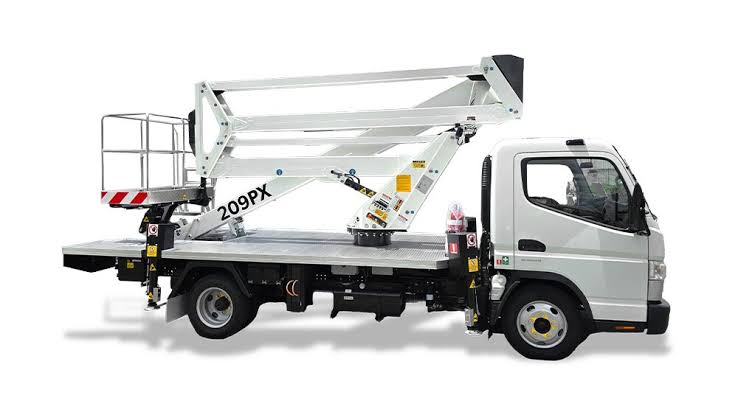
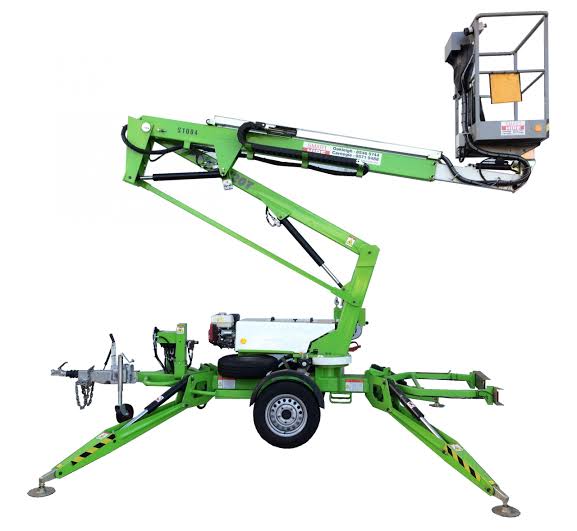
Here are the main types of boom-type elevating work platforms:
| Articulated boom lift | Telescopic boom lift |
|---|---|
|
|
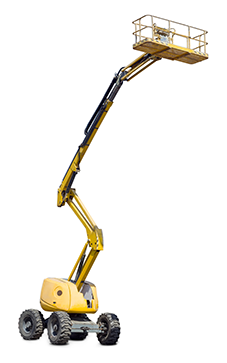
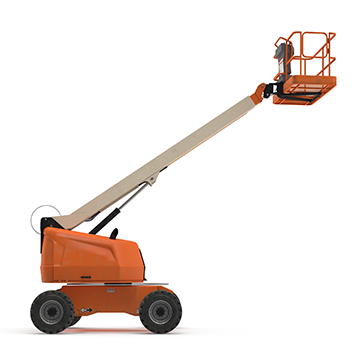
| Truck mounted | Trailer mounted |
|---|---|
|
|
Hazards
Boom-type EWP operations may present a risk of injury to workers and other people from:
- Crushing: fatal incidents and serious injuries may occur when operators and/or passengers are crushed against structures. There is an increased risk when the boom-type EWP is used near or adjacent overhead or fixed structures. The likelihood of a crushing incident increases in direct proportion to the number and proximity of fixed structures, such as roofs, cable trays and pipework near the boom-type EWP basket. The more time spent in a boom-type EWP close to fixed structures, the more likely a crush incident may occur.
- Falls from height: the basket moving unexpectedly may occur due to unstable ground conditions, an operator’s lack of familiarity with the boom-type EWPs model-specific controls, or malfunction of control.
- Site and equipment hazards: may include consideration of the height, reach, crush or trapping hazards, safe working load, ground conditions and terrain, restricted working space and any electrical hazards, including overhead powerlines.
- Collision risks: while travelling or manoeuvring the boom-type EWP, ground-based obstacles in close proximity to the boom-type EWP may divert an operator’s attention away from overhead or adjacent structures or their passenger’s safety.
- Mechanical failures: if the boom-type EWP malfunctions, it can lead to serious incidents, including falls or loss of control.
- Weather conditions: wind, rain, and extreme temperatures can impact the stability of the boom-type EWP, making it harder to operate safely.
- Limited visibility: EWP operators may struggle with visibility from elevated positions, increasing the likelihood of collisions or accidents.
- Electrical: contact with power lines can result in electrocution.
- Unstable surfaces: construction sites can have uneven or unstable ground, which can affect the stability of the boom-type EWP, resulting in tipping and falls from height.
- Overloading the platform: exceeding the weight limit can cause loss of stability, tipping and falls from height.
- Falling objects: these can strike workers below causing injury.
- Psychosocial hazards: for example, high job demands, isolated work, or fatigue can lead to physical and psychological injuries.
Safety requirements
- Manage risks: the Mobile elevating work platforms guideline will help you manage the risks associated with this plant. You can request free copies of this guideline to be mailed to you to refer to onsite.
- Use appropriate equipment: consider each task and any potential hazards (e.g. indoors or outdoors, presence of overhead hazards, condition of supporting surfaces) and select a boom-type EWP that is suitable to the task. It may be appropriate to use an alternative, like scaffolding, to reach and carry out the task.
- Operator protective devices: reduce the risk of workers being crushed against a fixed structure through the use of operator protective devices (also known as secondary guarding) such as physical barriers, pressure sensing devices, proximity sensing devices. In addition, standardised controls and a moveable or remote-control box allows for safer movement of the plant through doorways or where lower overhead structures create a crush risk.
- Safety harnesses: full safety harnesses must be worn by everyone on the platform of a boom-type EWP and be secured to the anchor point. Where there is a risk of a free fall, a fall-arrest harness designed for attachment to a lanyard assembly, including a personal energy absorber, must be worn by everyone on the boom-type EWP.
- if a boom-type EWP is not fitted with secondary guarding, standardised controls or a remote-control box, talk to the supplier about retrofitting options to manage risks of crush injuries. Secondary guarding is now available on most scissor and boom type Boom-type EWPs.
- if you plan to fit a secondary guarding device to an existing boom-type EWP, you must undertake a specific engineering risk assessment. This includes consultation with the designer/manufacturer/supplier to determine whether there are any impacts on design registration and to ensure any proposed changes do not introduce new safety hazards or negatively impact the operation of the boom-type EWP. You can contact SafeWork SA for further information about design registration requirements.
- Safe Work Method Statements (SWMS): working with boom-type EWPs requires a site-specific High Risk Construction Work SWMS being implemented before work commences. Refer to: SWMS for high risk construction work.
- Training: ensure operators are trained on the specific boom-type EWP model controls, including emergency procedures and descent controls, and are licenced and follow SOPs and SWMSs. Refer to MEWP Minimum standard of training and checklist.
- Working Load Limit: never exceed the Working Load Limit.
- Exclusion zones: ensure they are in in place and avoid lifting over people.
- Communication: have an agreed system of communication with support personnel who have line of sight of the operator.
- Operation: avoid lifting over people and ensure travel paths are clear.
- Emergencies: ensure support personnel are trained to use boom-type EWP ground-based controls for emergency descent.
- Wind: monitor wind speeds and their effect on the boom-type EWP and stop work if necessary.
High risk work licence
For a boom-type EWP where the boom length is 11 metres or more, the operator must hold a High Risk Work Licence.
The boom length is the greater of:
- the vertical distance from the surface supporting the boom-type EWP to the floor of the platform with the platform extended to its maximum height or
- the horizontal distance from the centre point of the boom’s rotation to the outer edge of the platform with the platform extended to its maximum reach.
Registration
Boom-type Elevating Work Platforms require design registration but not plant item registration.
Other types of EWPs (such as a scissor lift or telehandler) do not require design registration nor plant item registration.
Registration costs can be found at Registration Fees.
Design Registration
Plant design registration – Guidance notes
To register or alter the design of plant:
Plant design - New or alteration to design
The boom-type EWP can be designed to any internationally recognised published technical standard with the following documents being required for the registration of the plant design:
- each plant model must have a separate design registration application form.
- a statement signed by the designer of the mobile plant stating:
- the designer has complied with their obligations under section 22 of the WHS Act.
- the published technical standards and engineering principles used in the design.
- design calculations and drawing(s) in English, as referenced in the designer's statement
- an independent design verification statement.
- payment of the fee which lasts for the life of the design (payable on completion of the online application).
Note:
- design registration applies to all plant items manufactured to the same design.
- design registration is valid for the life of the plant.
- manufacturers, importers, and suppliers of plant are prohibited from supplying plant unless the design of that plant is registered.
- design registration in SA is not required if the plant design is registered in another state under a corresponding WHS law (WHS Act 2012 (SA)).
- any alteration to the design of registered plant that may affect health, and safety requires an alteration to its design registration.
Change of details
You must provide us with written notice within 14 days if:
- you change your name or address, or any other information stated on your application for registration
- the plant design has been altered to an extent where it is subject to new control measures
Inspection and maintenance
A preventative maintenance program must be in place, taking into account the working environment, frequency and severity of use of the plant. It needs to be carried out according to the manufacturer’s specifications and Australian standards (i.e. AS 2550.1, AS 2550.10), with inspections carried out by a competent person such as:
- Pre-operational inspection: before the beginning of each work shift or change of operator.
- Routine inspection: conducted at intervals of 3 months.
- Periodic inspection: conducted at intervals of 12 months.
- Major inspection: conducted by the end of the 10th year in-service.
For further information: Guide to inspecting and maintaining elevating work platforms - Safe Work Australia.
Record keeping
A record (e.g. logbook) of the service and maintenance history of the plant needs to be kept and made readily available and be written in easy to understand English.
Refer to AS 2550.10 and WHS Regulation 237.
Contact us
Visit: safework.sa.gov.au
Call: SafeWork Licensing Unit on 1300 365 255
Email: licensing.safework@sa.gov.au
Further information
SafeWork SA
- High Risk Work Licence
- SWMS for high risk construction work
- Elevating work platform deaths prompt safety warning | SafeWork SA
Resources
- Guide to managing the risks of elevating work platforms – SafeWork Australia
- Elevating work platforms - WorkSafe Victoria
- Elevating Work Platform Association of Australia
- Mobile Elevating Work Platforms 2019 Audit Report
- Mobile Elevating Work Platforms 2020 Audit Report
- Elevating work platforms | WorkSafe.qld.gov.au
- Safe Operation of an EWP - Master Builders Victoria
- MEWPs Working over water
- Guidance material for the safe design, manufacture, import and supply of plant - Safe Work Australia
- Working safely near overhead powerlines OTR SA
Legislation
- WHS Act 22 - Duties of PCBUs that design plant, substances or structures
- WHS Regulation 213 – Maintenance and inspection of plant
- WHS Regulation 219 (3) – Plant that lifts or suspends loads
- WHS Regulation 237 – Records of plant
- WHS Regulation 244 – Altered plant designs to be registered
Australian Standards
- AS 1418.1: Plants, hoists and winches - General requirements
- AS 1418.10: Plants, hoists and winches - Mobile elevating work platforms
- AS 2550.1: Plants, hoists and winches - Safe use, Part 1: General requirements
- AS 2550.10: Plants, hoists and winches - Mobile elevating work platforms
Codes of Practice
- Managing psychosocial hazards at work
- How to manage work health and safety risks
- Managing noise and preventing hearing loss at work
- Managing the risks of plant in the workplace
- Construction Work – Model Code of Practice – reference only as it is not approved in South Australia
- Elevating work platforms – SafeWork Australia – reference only as it is not approved in South Australia
- Working in the vicinity of overhead and underground electric lines – SafeWork Australia – reference only as it is not approved in South Australia.
- Managing the risk of falls at workplaces