


Guidance for workers and employers about making and managing complaints about psychosocial hazards
Should I make a report or a complaint?
A report is a general notification or statement about an event, often used for informational or record-keeping purposes. Workers may opt to report concerns about psychosocial hazards and risks in their workplace without asking for a specific response or action. This can help managers in their hazard identification and risk monitoring efforts. It also can be an appropriate course of action for workers who wish to alert others about psychosocial risk, but do not consider the risk to be serious enough to warrant any action at that time.
If you opt to make a report about psychosocial risks in your workplace, follow any workplace procedures for making reports about WHS risks. This may be through your management chain, Health and Safety Representatives and / or through a central WHS hazard notification system at your workplace.
In contrast, workers may opt to make a complaint about psychosocial hazards and risks. A complaint is a formal objection or expression of dissatisfaction, typically aimed at seeking resolution or redress.
What are my options for making a complaint?
Follow your workplace’s complaints process
If you have them in your workplace, you should follow the processes for making and resolving complaints in relation to psychosocial risks in your workplace.
If you reasonably believe that you have experienced harmful behaviour such as bullying or sexual harassment or been exposed to other psychosocial hazards at work, you should make reasonable attempts to resolve the matter internally before referring to external agencies for assistance.
In addition, you will need to:
- keep records of specific incidents, dates/times and any witnesses
- speak with your manager/supervisor, health and safety representative (if you have one) or union representative (if you have one)
- keep records of who you spoke to and when
- detail what actions have or have not been taken by you and your PCBU to resolve your complaint.
- If your organisation does not have any processes, or you are dissatisfied with their response to your concerns, there are a range of other agencies that may be able to assist.
If you are not able to resolve your complaint within your workplace, you can request assistance from an external agency
The most appropriate agency to approach in relation to your complaint will depend on the nature of the complaint, the jurisdiction, and the desired outcome.
If you are concerned about psychosocial risks in your workplace and do not believe that they are being adequately addressed:
- You can make a complaint to SafeWork SA. SafeWork SA cannot directly address an individual's behaviour. The Inspectorate looks at what systems, policies and procedures the organisation or business has in place to make sure that psychosocial hazards and risks are managed adequately in workplaces and in accordance with the WHS Act and Regulations.
If you want to apply for a stop bullying or sexual harassment order:
- You can do so through the Fair Work Commission. See this information about eligibility for stop bullying orders and stop sexual harassment orders. The Commission can also assist you in relation to general workplace protections, unlawful termination or unfair dismissal. The Commission’s jurisdiction in relation to harmful behaviours is limited to preventing workers from being bullied or sexually harassed at work where mediation and conciliation have failed. It cannot issue fines or penalties and cannot award financial compensation. Their focus is on resolving the matter and enabling normal working relationships to resume.
If you believe that you have been unfairly dismissed:
- you can lodge an unfair dismissal claim with the South Australian Employment Tribunal.
If exposure to psychosocial risks has caused you physical or psychological injury or illness:
- you can make a workers’ compensation claim with your employer or through Return to Work SA.
If you would like assistance about conciliating a complaint about workplace sexual harassment:
- you can contact the Australian Human Rights Commission or Equal Opportunity SA.
If you wish to report an assault or other criminal behaviour:
- contact SA Police. Some behaviours are criminal acts, such as physical or sexual assault, indecent exposure, stalking, and obscene or threatening communications (e.g. phone calls, emails, and posts on social media). Referring these matters to the police is advised.
Employers should have a process for managing and resolving complaints relating to work-related psychosocial hazards such as bullying, sexual harassment, high work demands, poor organisational justice or low role clarity.
Effective complaints handling entails balancing procedural fairness with timeliness (from initial response to resolution) and a strong commitment to protecting the health and safety of directly affected parties.
Whether a worker has made a complaint is a matter of substance, rather than the form or way in which it is made. That is, regardless of how it is communicated, a complaint about workplace psychosocial risks is a grievance that is brought to an employer’s attention for consideration and either formal or informal resolution.
To manage and resolve complaints about psychosocial hazards, employers should follow the guidance set out in SafeWork SA’s guide to effective complaints handling. This provides guidance on how to ensure complaints are handled in a manner that is procedurally fair and minimises health and safety risks for complainants, complaint respondents and other persons.
Effective handling of workplace complaints 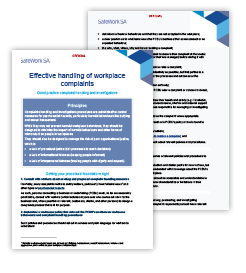
This Safe Work Australia guide to preventing and responding to workplace bullying includes an example workplace bullying policy and a guide for investigating complaints of bullying.
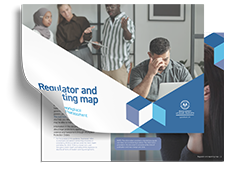
This regulator and reporting map provides an overview of the agencies regulating workplace psychosocial hazards, including bullying and sexual or gender-based harassment.