


Carpenters are number on injury occupation trade in the construction industry, with injury claims rising by 20% over the last two years. Young workers and apprentices are especially at risk. This factsheet gives an overview of common injury mechanisms and outlines practical controls to reduce risk and promote safer work practices.
Mechanism of injuries
Age Snapshot
- Young workers are at higher risk:
- 35% of injuries occurred in carpenters under 21
- 58% were under 26 years old.
- Apprentices made up 22% of injury cases.
Falls from height
In 2023, SafeWork SA data showed that 17% of serious injuries from falls from height involved carpenters. High-risk activities included: working near live edges (e.g. stair voids), first fix carpentry (e.g. steel frame installation), roof work, scaffold and ladder use.
Refer to: Falling from heights - Safety Snapshot
Injury claims analysis
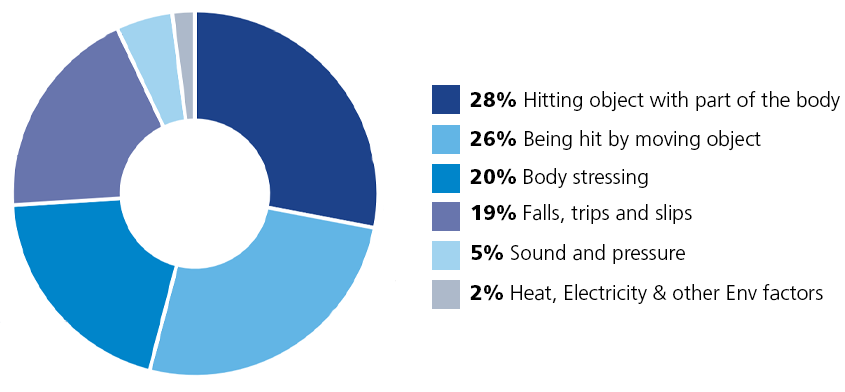
Mechanism: Hitting Objects with Body (28%)
Common causes: Misuse or loss of control of power tools (nail guns*, grinders, and saws). Poor housekeeping or lack of maintained walkways (cluttered spaces), lack of PPE use (hard hat).
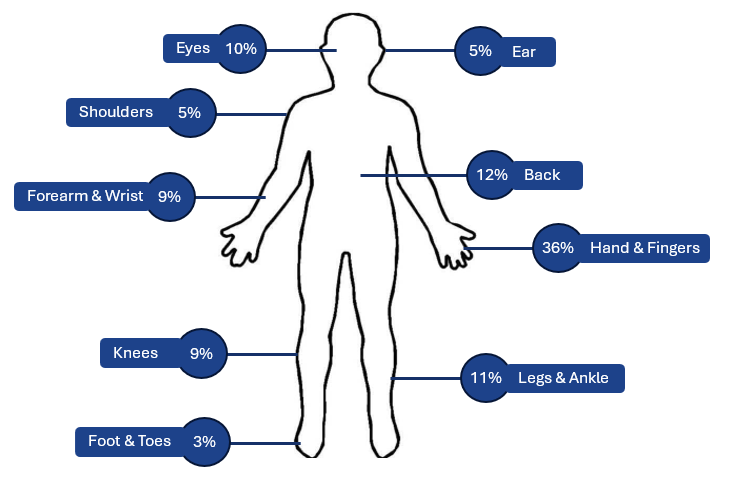
Type of injuries: Lacerations, fractures, muscle / tendon injuries
Mechanism: Being hit by moving or falling object (26%)
Common causes: Inadequately secured materials or structural failures (e.g., falling frames), mishandling heavy or awkward items (timber beams, panels), flying debris from tools like grinders and nail guns, lack of PPE use (flying debris in eyes).Inadequately secured materials or structural failures (e.g., falling frames), mishandling heavy or awkward items (timber beams, panels), flying debris from tools like grinders and nail guns, lack of PPE use (flying debris in eyes).
Type of injuries: Lacerations (50%), fractures (12%), joint/muscle injuries
Mechanism: Body stressing (20%)
Common causes: Exerting high force when handling large, heavy items (timber, steel frames, windows), repetitive, forceful movements (hammering, drilling), sustained, awkward postures (bending, kneeling, twisting, lying, overhead reaching) when working in constrained spaces, prolonged kneeling.
Type of injuries: Joint/muscle injuries (60%), MSDs (27%)
Mechanism: Falls, trips, slips (19%)
Common causes: Scaffold failures; working near a live edge without fall arrest system; loss of balance while working from ladders (handling materials, using nail guns); positioning ladders on unstable ground; missteps when climbing down ladders, slippery/wet ground conditions; working on uneven ground when using jackhammers, poor housekeeping or lack of maintained walkways (tripping on cables, equipment and other material).
Type of injuries: Joint/muscle injuries (40%), lacerations (27%), fractures (22%)
Mechanism: Sound & pressure (5%)
Common causes: Prolonged exposure to noisy tools - power saws, drills, nail guns, jackhammers.
Type of injuries: Hearing damage
Mechanism: Heat, electricity, environment (2%)
Common causes: Contact with live wires, working in high-temperature environments.
Type of injuries: Burns, heat stress
* A significant number of injuries happen due to loss of control or misuse of nail guns, especially when set to bump fire mode, which can cause unintentional discharge - particularly while carrying, repositioning, or working in tight spaces.
SafeWork SA Guidance
- Falling from heights - Safety Snapshot
- Hand & power tools
- Nail guns
- Angle grinders
- Hazardous Manual Tasks Risk Management
- Slips, trips & falls
- Edge protection for roof work (guardrail systems)
- Scaffolds - Access and egress in residential construction
- Ladders
- Hazardous Noise and Noise-Induced Hearing Loss (NIHL)
- Heat & UV
- Electrical